Expert Talk on Document Design for BS Computer Science Students

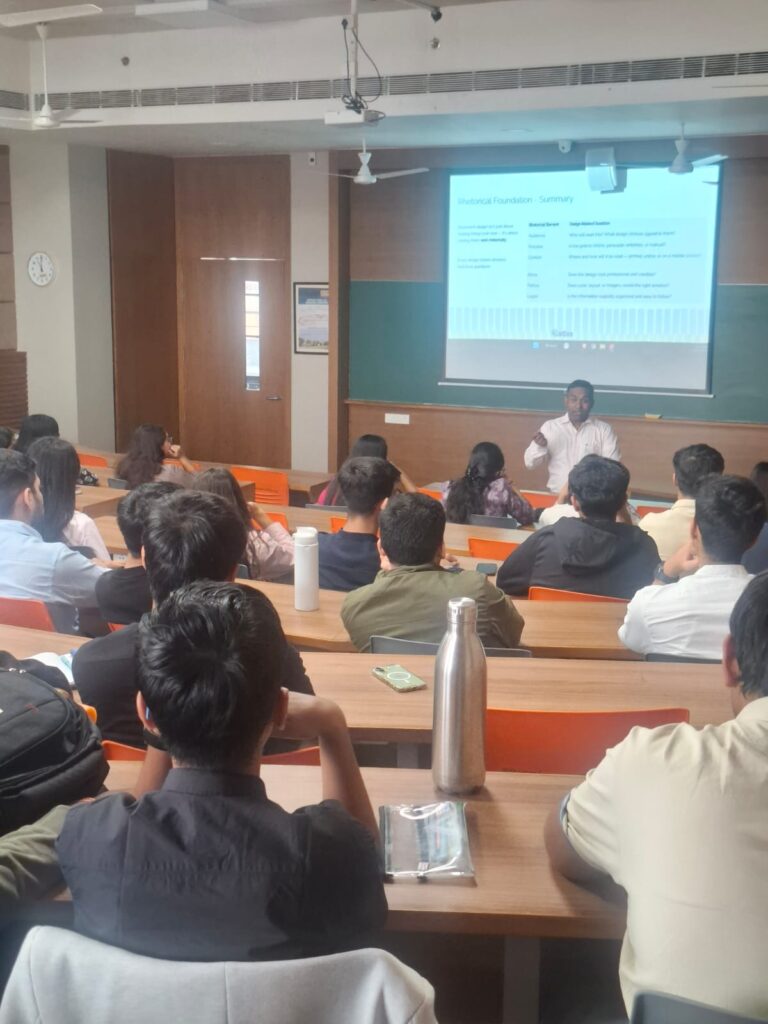
On 18th November 2025, I had the honour of being invited by Prof. Noopur Thakkar to deliver an Expert Talk for the BS (Computer Science & Engineering) first-year students on the topic “Document Design” as part of their course Rhetoric and Composition. The session took place at the Nirma University campus, and it was an enriching interaction with young learners stepping into the world of communication, design, and digital literacy.

Why Document Design Matters in Computer Science

document design lecture

While Computer Science is deeply rooted in logic, programming, and technology, the ability to communicate effectively—both visually and verbally—is an essential skill for every aspiring engineer.
From writing project reports to creating user guides, proposals, UI/UX flows, presentations, and even documentation for code, design influences how information is perceived and understood.

My session aimed to introduce students to the fundamentals of visual rhetoric and demonstrate how thoughtful design enhances clarity, persuasion, and user experience.

Key Concepts Discussed During the Session

I structured the talk around practical principles and real-world applications that students can apply across academic and technical communication.

1. Visuals Communicate as Powerfully as Words

Visuals are not decoration—they are meaning.

Whether it’s an icon, diagram, flowchart, or infographic, visuals help readers:

  • Grasp concepts faster

  • Retain information better

  • Interpret complex ideas with ease

Good document design uses visuals intentionally to enhance comprehension, not distract from it.

2. Layout & Structure Shape Persuasion

The arrangement of information directly affects:

  • Credibility

  • Clarity

  • Impact

A well-structured document guides the reader effortlessly through the message.
We discussed how spacing, hierarchy, alignment, grouping, and sequencing influence the reader’s journey—and how a poor layout can confuse even the best-written content.

3. Visual Rhetoric: How Visuals Persuade

Visual rhetoric is the art of using design elements to influence interpretation.

Students explored how:

  • Icons

  • Colour accents

  • Captions

  • Diagrams

  • White space

  • Images

  • Typography

…help frame a message and shape perception.
Every visual element “speaks” and contributes to meaning.

4. A Document Isn’t Only Written — It’s Seen

Engineering students often focus on content, not presentation.
However, I emphasised that:

A document succeeds not only when it is well-written, but when it is well-designed.

Design is the reader’s first touchpoint.
Before a single word is read, the visual impression already influences:

  • Engagement

  • Trust

  • Interest

  • Understanding

A document’s appearance is part of its argument.

Introducing CRAP Principles of Design
CRAP Principles of Document Design

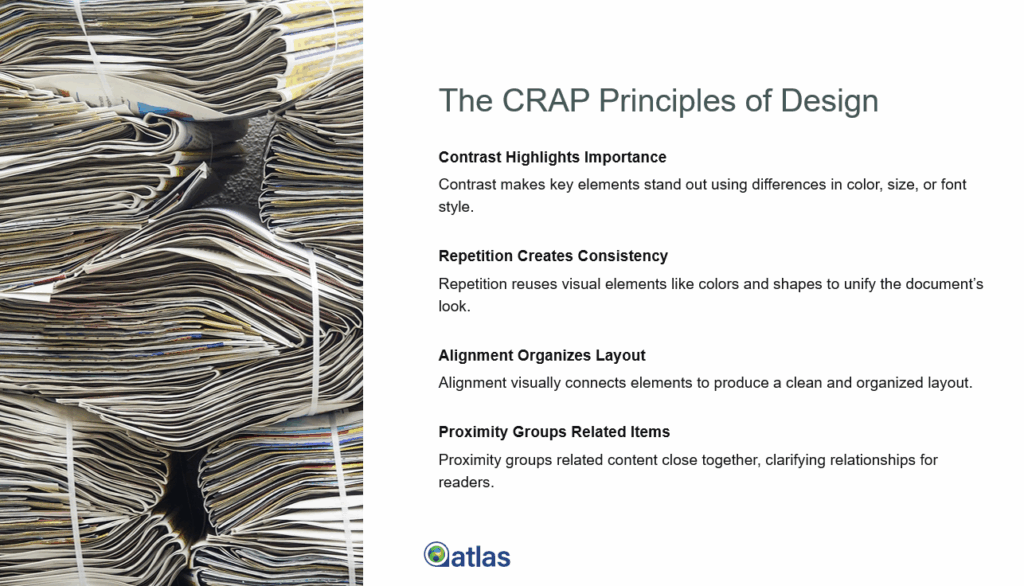
To provide students with a practical framework, I explained the globally recognised CRAP Principles—a simple yet powerful method used by designers worldwide.

C – Contrast

To highlight key elements and separate ideas visually.

R – Repetition

To create rhythm, consistency, and a strong visual identity.

A – Alignment

To ensure clarity, professionalism, and logical flow.

P – Proximity

To group related elements and guide the reader through information.

These principles form the foundation for clear, persuasive, and user-friendly document design—skills crucial for academic and professional success.

An Engaging Student Interaction
expert lecture on document design


The students were highly receptive and engaged, asking thoughtful questions and connecting design principles with their own coursework—such as project documentation, presentations, and UI/UX concepts.

Many expressed how they had never viewed documents as “visual experiences” before and how the session changed their perspective on communication.

A Note of Gratitude

My sincere thanks to Prof. Noopur Thakkar & Prof. Richa Sharma, and the university for inviting me to share these insights with the first-year cohort.
It is always a pleasure to interact with young minds and contribute to their growth.

I look forward to more such opportunities to mentor and inspire the next generation of computer science professionals.
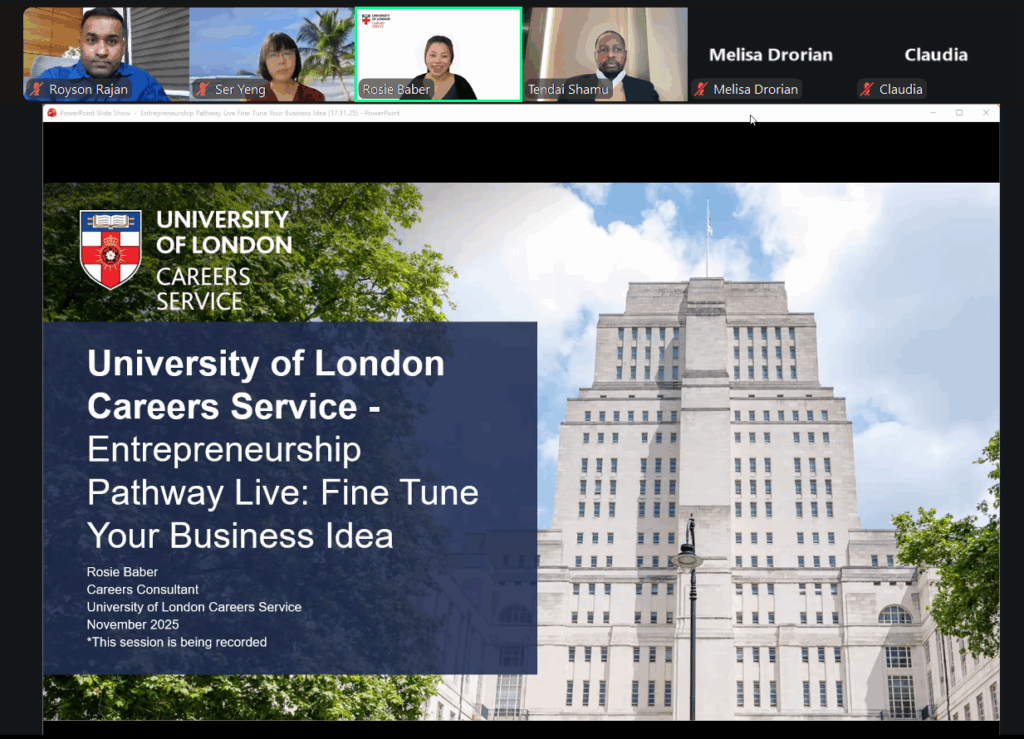
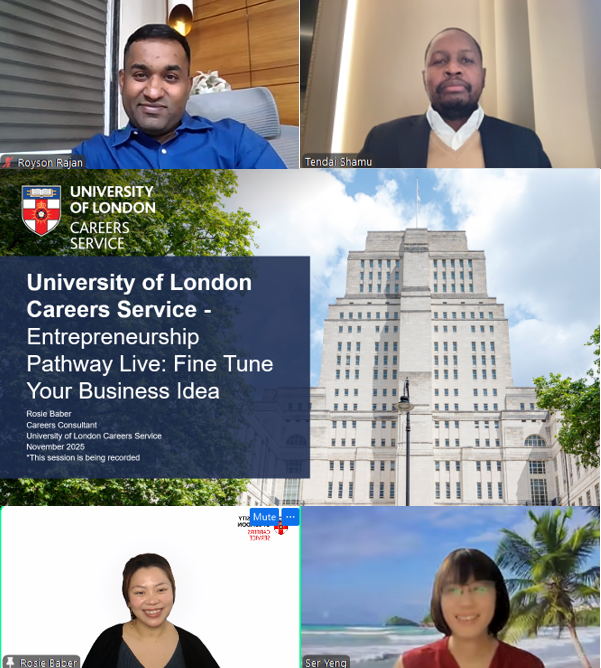
Refining Business Ideas for Real-World Success: My Experience as a Panelist at Global Entrepreneurship Week

I was honoured to be invited as a panelist for the Global Entrepreneurship Week (GEW) hosted by the University of London (UoL)—a global celebration of innovation, creativity, and entrepreneurial thinking on 17th November, 2025.
The event brought together alumni and industry professionals to guide students and aspiring founders on how to shape and validate business ideas in today’s dynamic world.

Event link: https://www.linkedin.com/events/7388521929449717760/

About the Event

The session was part of UoL’s initiative to connect alumni entrepreneurs with current students for meaningful conversations, idea sharing, and mentorship.
The discussion revolved around one essential theme:

“Having a business idea is just the beginning. How do you know if it is viable, scalable, and sustainable?”

The panel comprised:

  • Ler Ser Yeng – Senior Manager II, Singapore University of Technology and Design
  • Royson Rajan – Founder, Atlas SoftWeb Pvt Ltd
  • Tendai Shamu – Principal, First Serve Ventures

Together, we represented diverse entrepreneurial journeys, industries, and geographies.

My Talk: Fine-Tune Your Business Idea Through Validation, Execution & Evolution

During my session, I focused on the process every entrepreneur must adopt to transform an idea into a sustainable business.
I highlighted three core pillars:


  1. Validation: Test the Idea Before You Build It

I emphasized the need to validate every assumption by:

  • Identifying a real problem
  • Understanding your target audience
  • Studying competitors and market behaviour
  • Building a minimal prototype (MVP)
  • Collecting early feedback

Validation ensures that your idea is rooted in real needs, not assumptions.


  1. Execution: Bringing the Idea to Life

I spoke about the importance of disciplined, strategic execution:

  • Start lean and focused
  • Build processes for consistency
  • Set clear, measurable goals
  • Develop a capable and aligned team
  • Maintain momentum, even when challenges arise

Execution is where ideas transform from concept into tangible value.


  1. Evolution: Improving Continuously

No business idea succeeds without evolution.
I highlighted the need to:

  • Adapt based on customer feedback
  • Tweak offerings to fit market expectations
  • Innovate to stay relevant
  • Build for long-term scalability

Evolution keeps a business future-ready and aligned with changing realities.

Global Entrepreneurship Week


Why This UoL Initiative Matters

This event beautifully demonstrated UoL’s commitment to building an active entrepreneurial ecosystem by:

  • Connecting alumni from different fields
  • Providing students with real-world insights
  • Encouraging meaningful discussions
  • Creating a platform for mentorship
  • Inspiring the next wave of innovators

The engagement and curiosity from students made the session lively and impactful.


Closing Thoughts

My key message to every aspiring entrepreneur was simple:

A business idea succeeds when it is validated with clarity, executed with discipline, and evolved with purpose.

I am grateful to the University of London for hosting this session and for creating opportunities that bridge experience with aspiration.
I look forward to contributing to more such initiatives that empower young entrepreneurs to shape ideas into powerful, sustainable ventures.


Distinguished Speaker Session at NITTTR Gujarat Extension

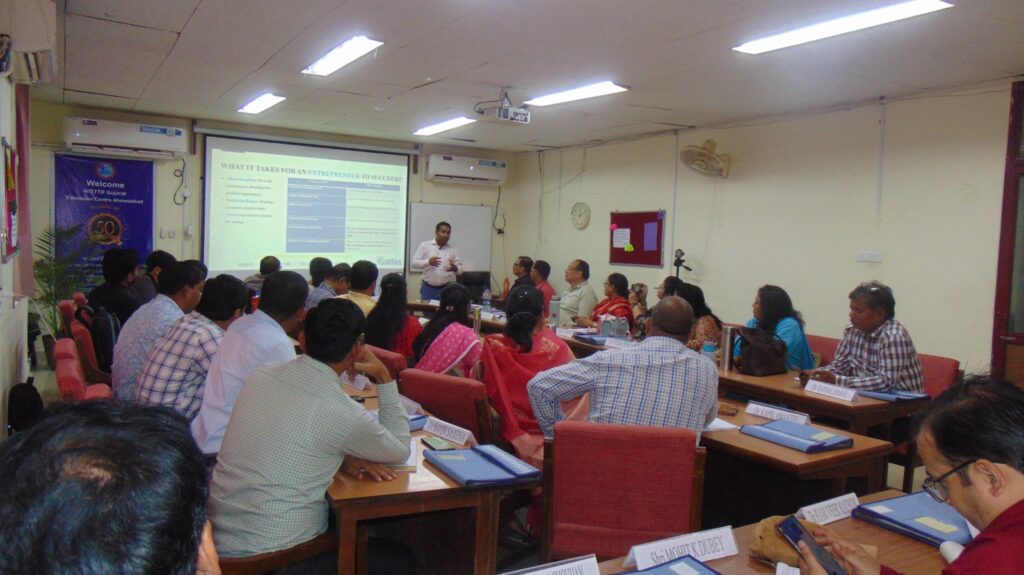
I had the distinct honor of being invited as a Distinguished Speaker by the National Institute of Technical Teacher’s Training and Research (NITTTR), Gujarat Extension for a special workshop organized for teaching faculty members representing higher education institutions from Madhya Pradesh.

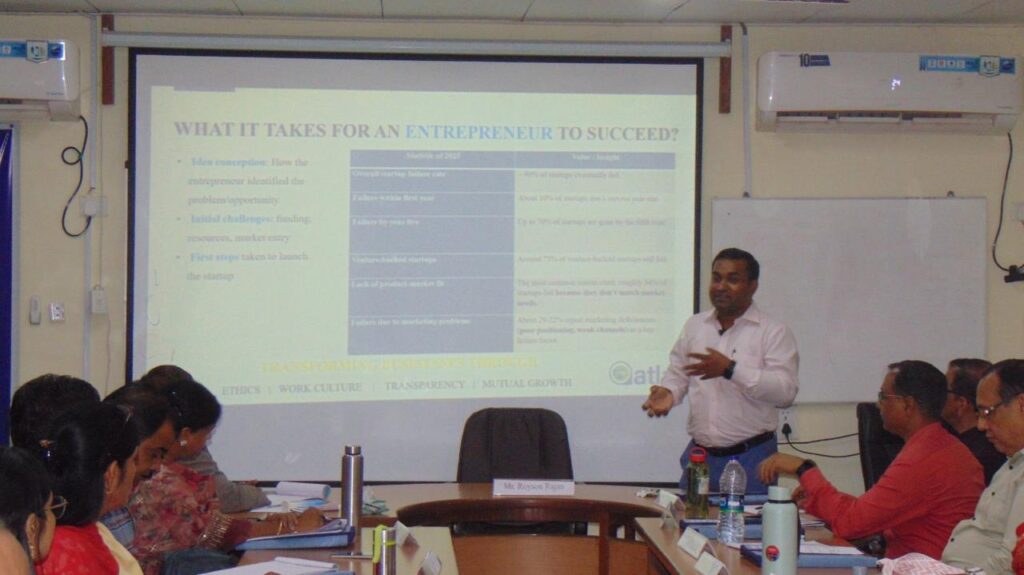
The theme of my session was “Success Story of an Entrepreneur.” It was a deeply enriching experience to reflect on my own entrepreneurial journey, share lessons gathered over the last 15 years, and illustrate how digital marketing has been a driving force in enabling startups to evolve into sustainable businesses.

NITTTR


Key Insights from My Session

📌 Essentials of Entrepreneurship
I highlighted how the entrepreneurial journey begins with identifying a meaningful problem, shaping an idea into a viable solution, and navigating challenges such as limited resources, funding, and competitive market entry.

📌 Startup Realities in 2025
To provide perspective, I shared key industry statistics:

  • Close to 90% of startups do not survive, with 10% failing within the very first year.
  • By the fifth year, 70% of startups shut down.
  • 34% fail due to lack of product–market fit, while nearly 25% collapse owing to marketing challenges.

📌 The Transformative Role of Digital Marketing
I emphasized that digital marketing today is less about selling and more about storytelling. Startups must strategically leverage tools such as social media, SEO, content marketing, paid campaigns, and influencer collaborations to enhance visibility, engage audiences, and accelerate growth.

📌 The Atlas Journey
I also shared how, at Atlas SoftWeb, we have anchored our growth on strong values of ethics, work culture, transparency, and mutual trust. This foundation has been instrumental not only in expanding the company but also in building long-standing relationships with clients and teams across the globe.

NITTTR

Why This Session Stood Out

Engaging with professors and mentors—individuals who shoulder the responsibility of shaping tomorrow’s leaders—was both humbling and inspiring. Their thoughtful questions reflected the depth of curiosity and dedication they bring in guiding the next generation of entrepreneurs in India.


Closing Reflections

Entrepreneurship is not about rushing into building a business; it is about resilience, clarity, and adaptability. When the right idea is backed by vision and ethics, it has the power to transform industries and lives.

I remain sincerely grateful to NITTTR Gujarat Extension for extending this opportunity, and I look forward to contributing to many more such meaningful dialogues in the future.


Elevating My Digital Marketing Journey: Certified by ICTRD

I’m thrilled to share with you all a significant milestone in my professional journey – I’ve recently achieved certification as a Digital Marketing Expert from the esteemed Indian Council for Technical Research and Development (ICTRD). It’s an accomplishment that I’m incredibly proud of, and I’m excited to embark on this next chapter of growth and learning.

The journey towards obtaining this certification has been both challenging and rewarding. The Digital Marketing Expert course offered by ICTRD provided me with a comprehensive understanding of various aspects of digital marketing, including search engine optimization (SEO), social media marketing, content marketing, email marketing, and more. Through in-depth lectures, practical exercises, and real-world case studies, I gained valuable insights and practical skills that I can apply to drive success in the ever-evolving digital landscape.

What makes this certification particularly special is its recognition by ICTRD, a reputable institution known for its commitment to excellence in technical education and research. This validation not only boosts my confidence in my abilities but also adds credibility to my expertise in the field of digital marketing.

I believe that continuous learning and upskilling are essential in today’s fast-paced digital world, where trends and technologies are constantly evolving. By obtaining this certification, I’ve reaffirmed my dedication to staying ahead of the curve and delivering top-notch results for my clients and stakeholders.